What is an infrared sauna?
How infrared saunas work, how they differ from a traditional sauna, and what to look for — written by our clinical and technical teams, for anyone just starting to research.
On this page9 sections
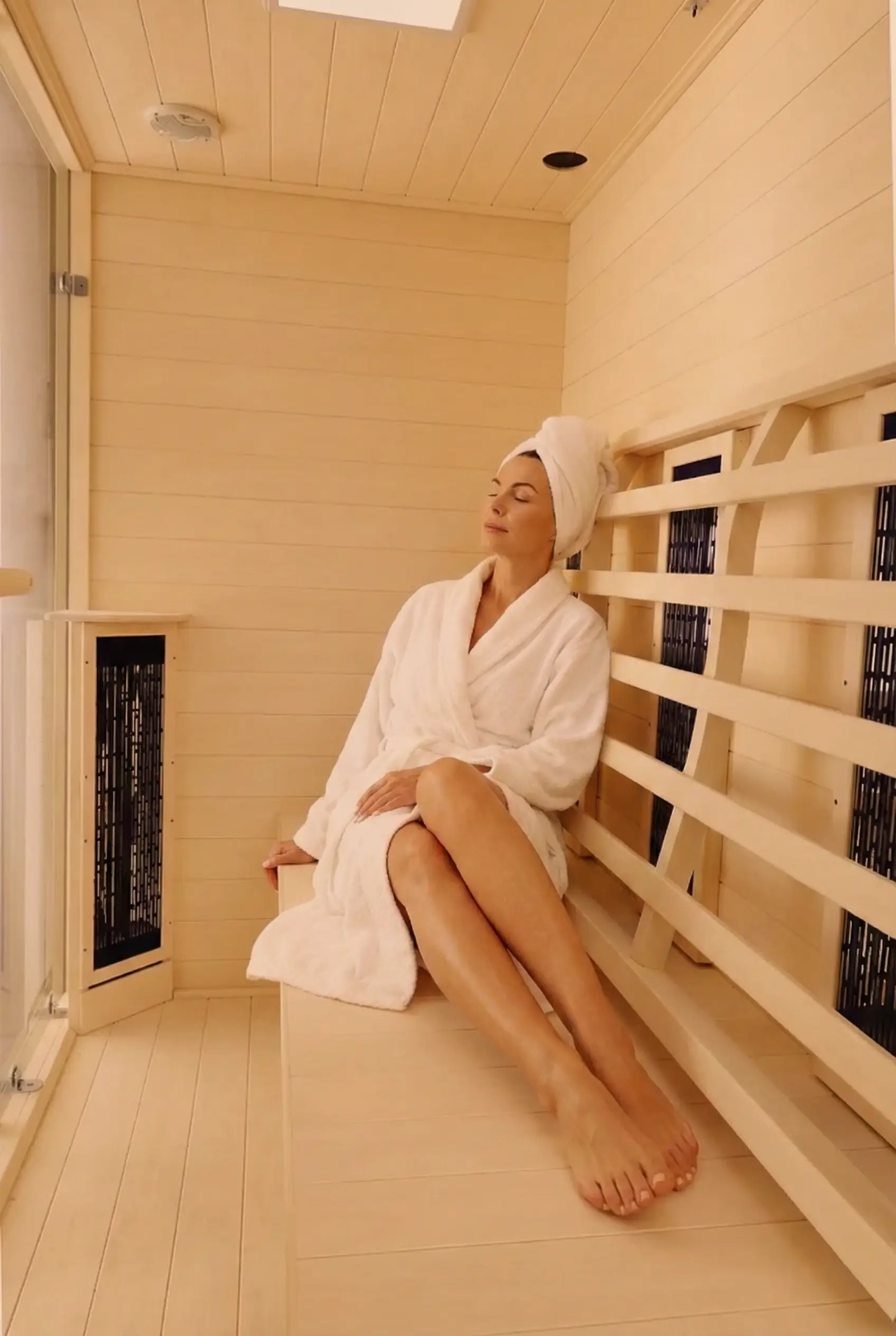
Heat that warms you, not the air
That one difference is why an infrared sauna can run at a much lower temperature than a traditional one, and why many people find it easier to stay in long enough to benefit.
Why far infrared is easier to stay in
How the heat reaches you
|
Traditional sauna Hot air, often with steam |
Far infrared sauna Infrared light |
|
|---|---|---|
|
How it heats you |
Heats the air, which heats you |
Warms your body directly |
|
Air temperature |
150–195°F or more |
100–158°F Most people prefer 120–130°F |
|
The air you breathe |
Hot, and humid with steam |
Cooler and drier |
|
Time to heat up |
Typically longer |
About 10–15 minutes |
|
Session length |
Often shorter |
30–40 minutes, once you’re used to it |
Far, near and mid infrared
- Far infrared — our suggestion. The most researched wavelength for sauna use, and the band behind the studies on our benefits page.
- Near infrared — Useful in some targeted medical treatments, but it can damage eyes and skin with long exposure, and there’s no consistent, safe dose in a sauna. Near infrared risks
- Mid infrared — Little research supports it for sauna use, and it has no proven advantage over far infrared.
The infrared spectrum
What is “Full spectrum?“
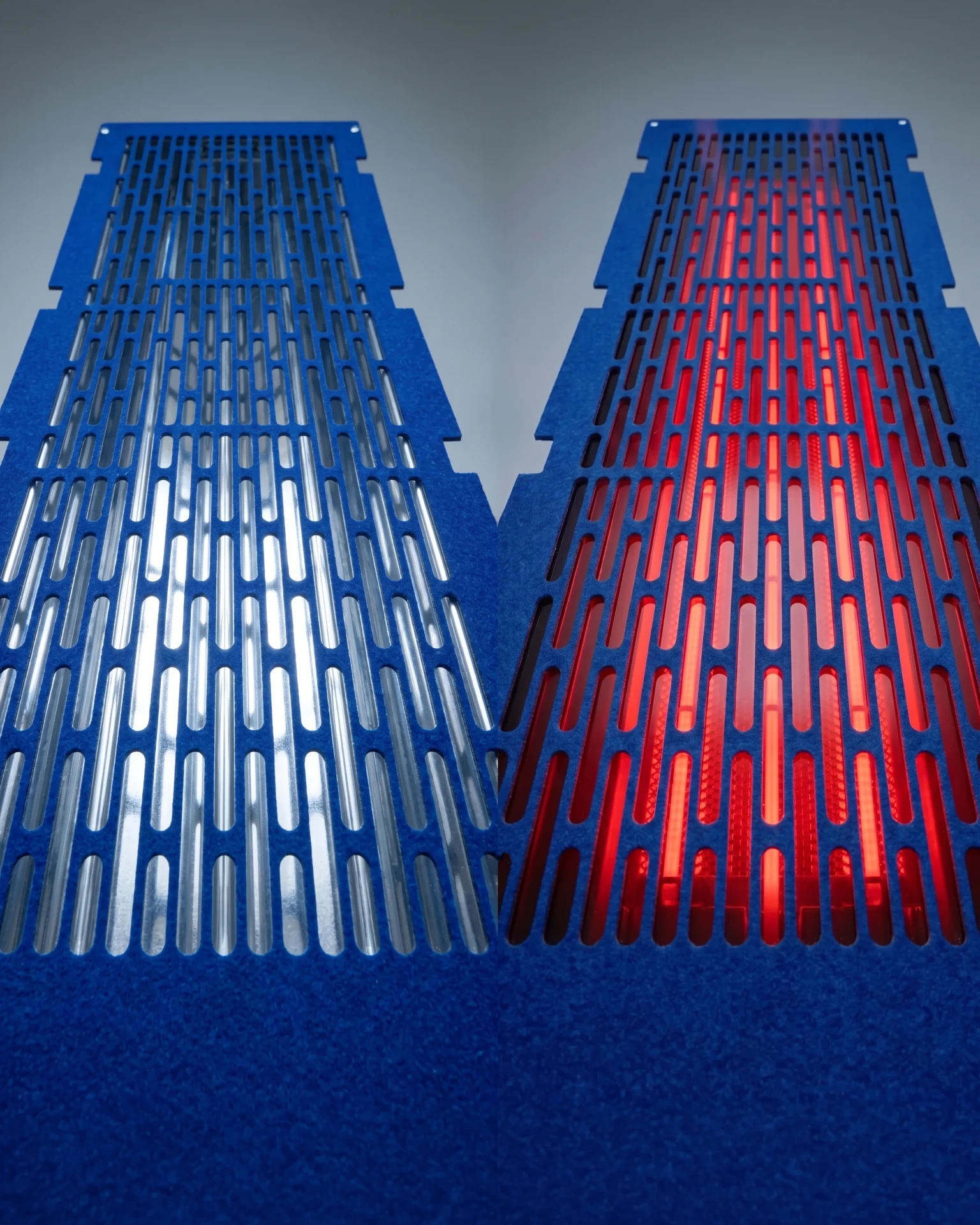
“Full spectrum” saunas add near and mid infrared to the far infrared that does most of the heating. The term isn’t defined or regulated, so how much near and mid infrared a “full spectrum” sauna gives off varies widely from brand to brand. It’s worth asking for specifics when you compare.
Our take
Far infrared is the foundation of every sauna we build, and it’s still what we recommend for most people. Most of the research on infrared sauna use involves far infrared, and the evidence for adding other wavelengths is thinner so far.
Some people like the extra warmth and glow of near and mid infrared, so we now offer an optional full spectrum front heater. If you’re considering it, our team can walk you through exactly what it puts out and help you decide if it’s a good fit.
What makes a good heater
- Steady far infrared — it gives off far infrared consistently, for the whole session.
- The right surface temperature — hot enough for far infrared, not visible red light. A far infrared heater doesn’t glow.
- Even heat — it warms you evenly, without hot spots.
- Reflection toward you — it sends its energy toward your body, not into the walls.
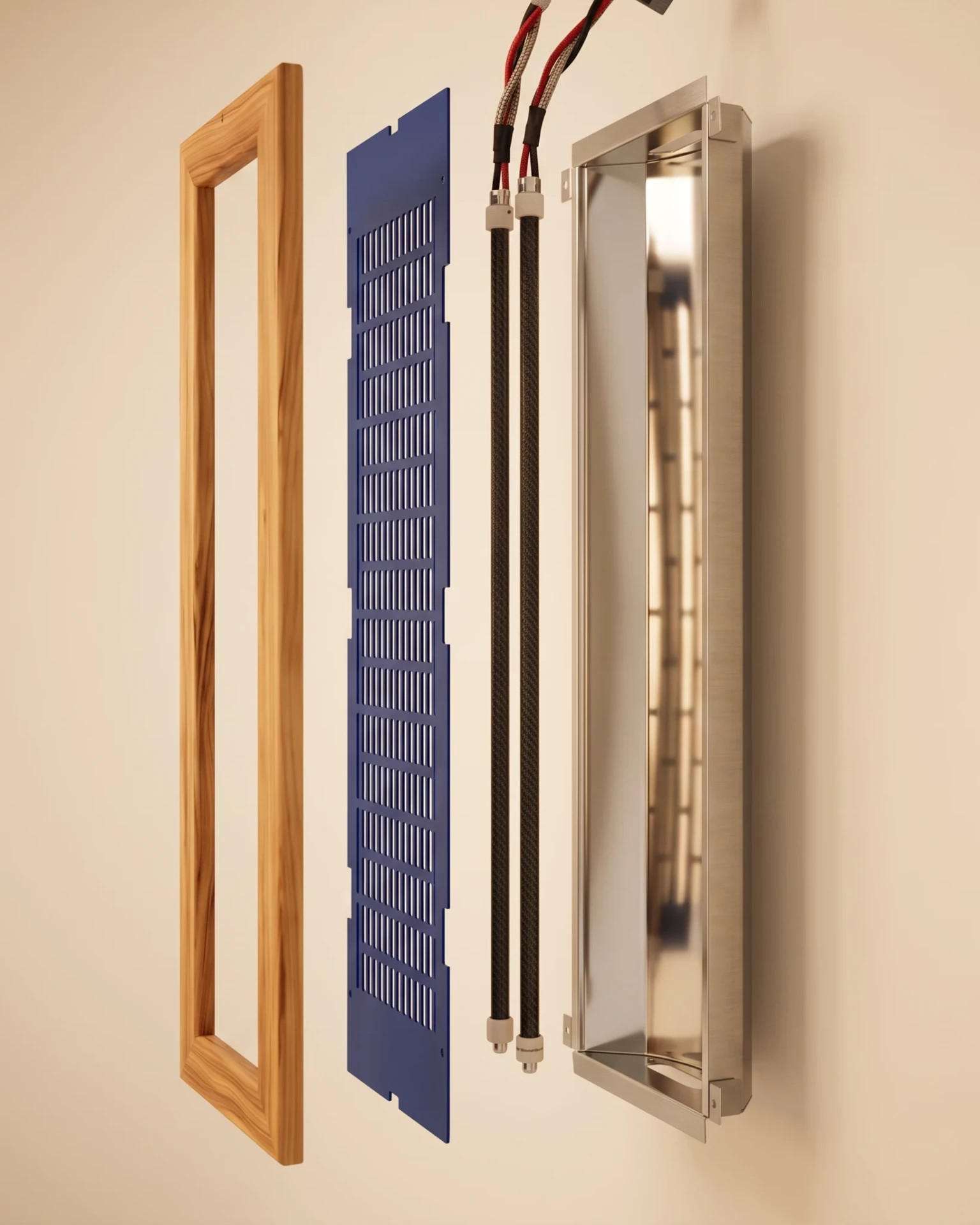
Four places the difference hides
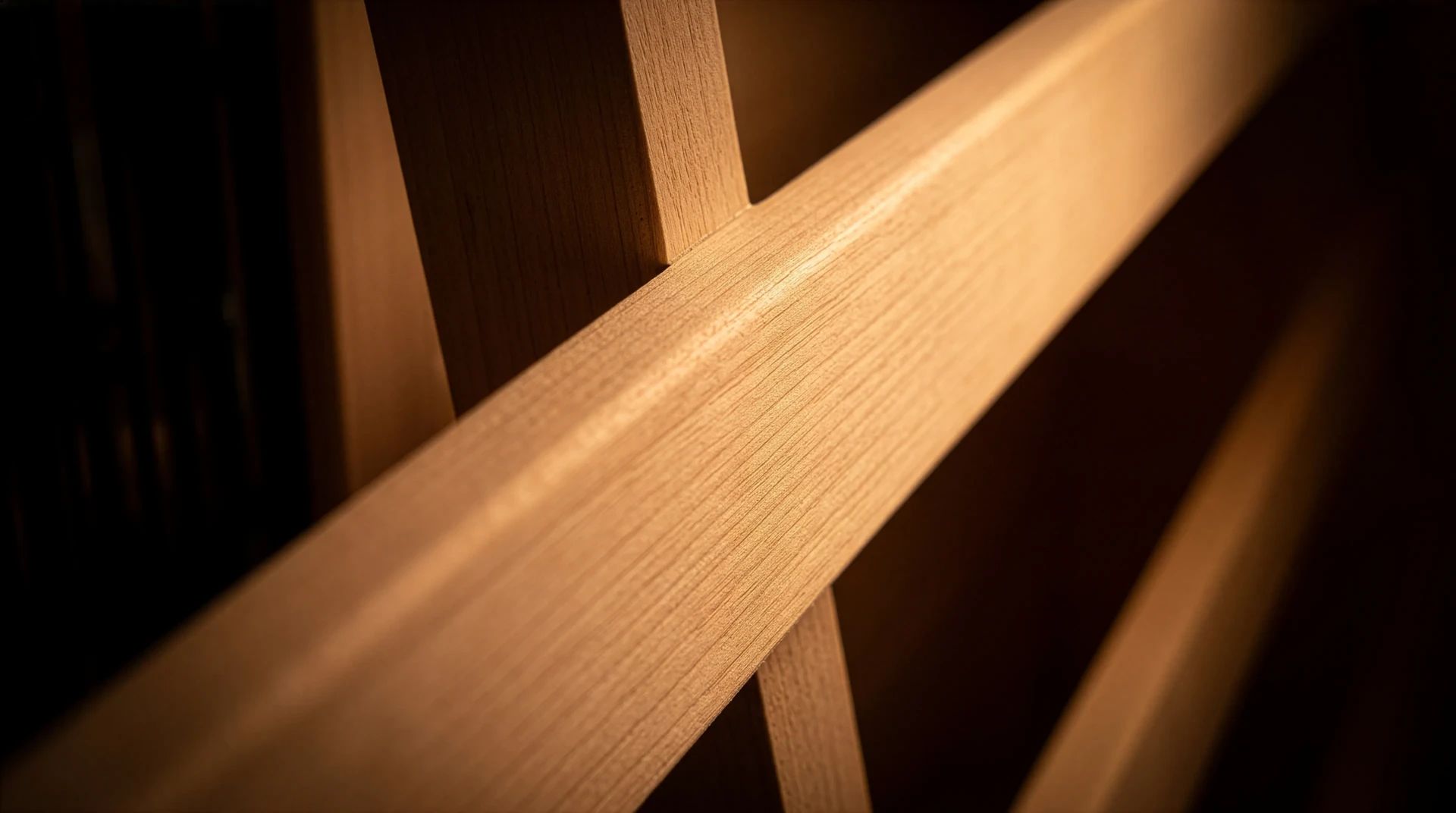
Heat makes poor wood, glues and finishes give off chemicals. Look for solid wood, no plywood and no chemical treatments.

Emissivity and design decide how much far infrared reaches you, and how evenly.
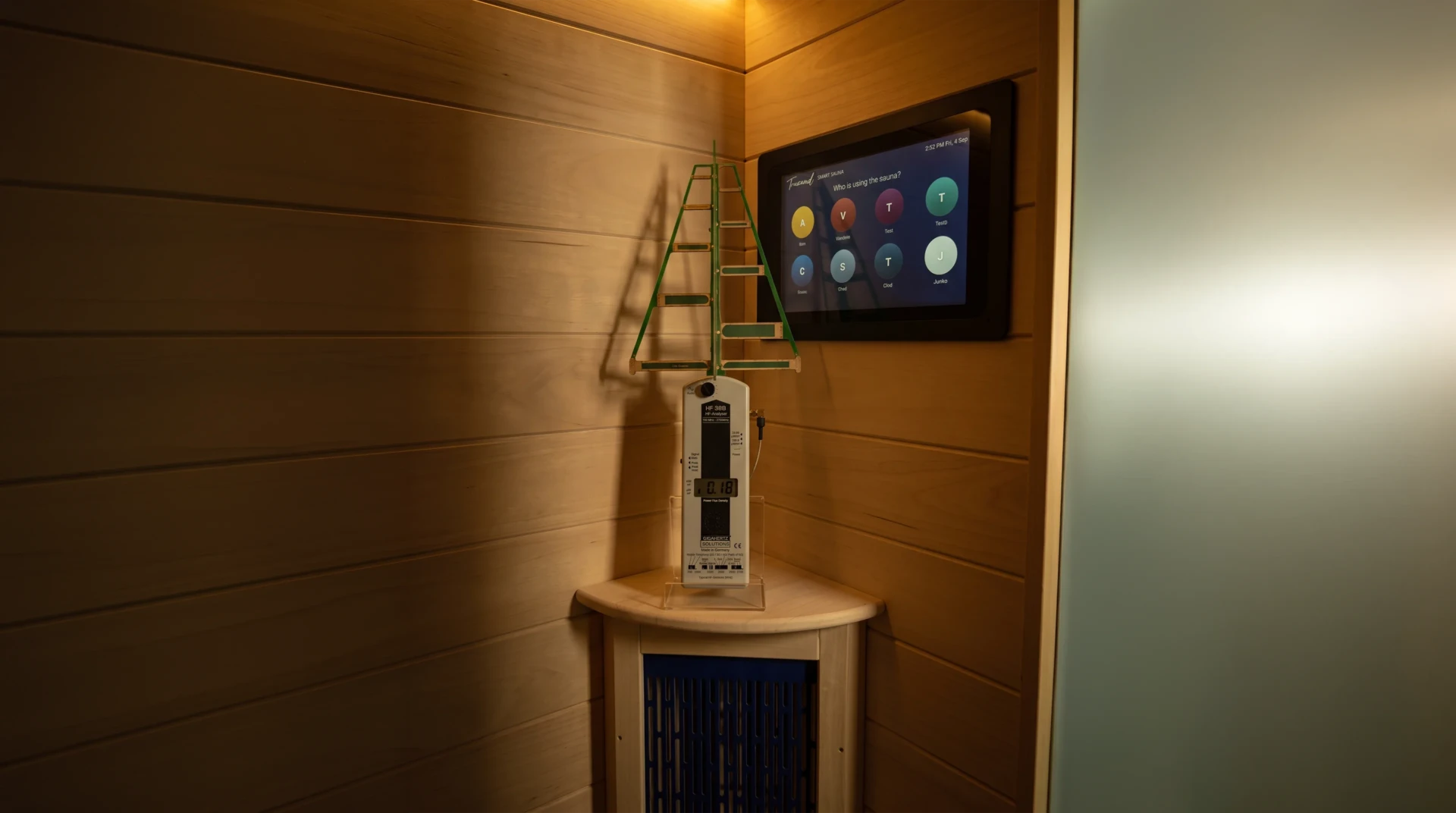
The heaters sit inches from you for half an hour. Ask for the measured electric and magnetic fields — both.
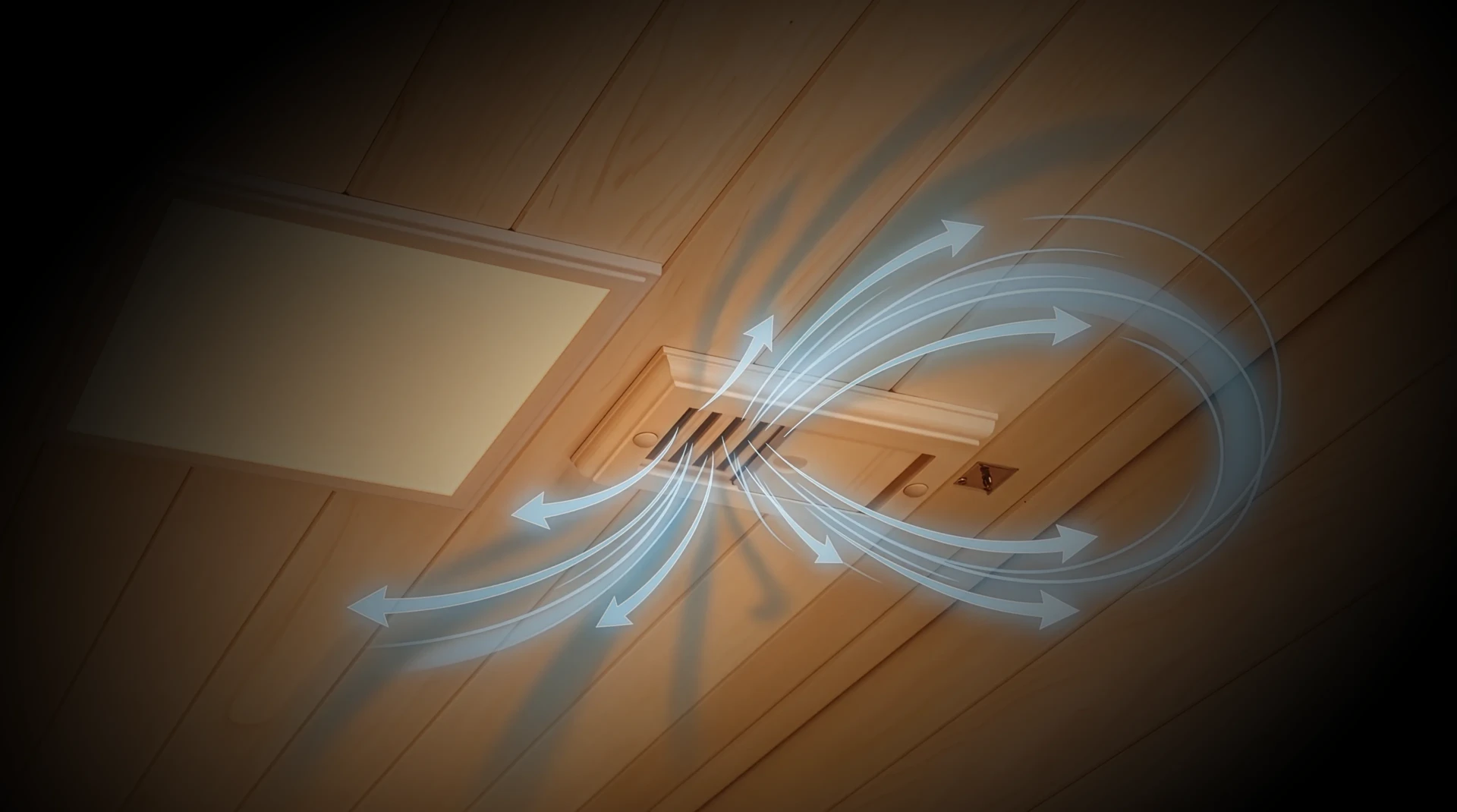
A closed cabin builds up carbon dioxide. Active ventilation keeps bringing in fresh air.
What regular sessions do
Lower cardiovascular and dementia risk in long-term studies; less pain and faster recovery in far infrared trials. We label the strength of every claim.
How to start
Start short
10–20 minutes at 120–130°F for your first sessions. If you are pregnant, have a heart condition, or take medicine that affects how you handle heat, check with your doctor first.
Drink water
Before, during if you need to, and after. Electrolytes help on longer sessions, or more than one in a day.
Listen to your body
Get out if you feel dizzy, light-headed or unwell. Go by how you feel, not by the timer.
Build up
Work up to 30–40 minutes over your first few weeks, three or four times a week.
Rinse and wipe down
Shower with warm water afterward. Now and then, wipe the bench with a clean cloth and a natural cleaner.
Questions
How does far infrared heat differ from traditional sauna heat?
Far infrared heat penetrates directly into body tissues, allowing for effective therapy at lower, more comfortable temperatures compared to traditional saunas’ hot air approach. More on traditional vs infrared saunas.
Why choose a far infrared sauna over other types?
Far infrared saunas offer the most researched and safest form of infrared therapy, providing optimal benefits at comfortable temperatures without the potential risks associated with other infrared wavelengths.
How do I know if a sauna is actually producing far infrared heat?
Quality far infrared saunas use specific heater materials with high emissivity rates. Unlike near infrared heaters, which glow red, far infrared heaters don’t change color while they run — but you will feel the heat from them.
What’s the ideal temperature for a far infrared session?
Between 100°F and 140°F, with most people finding 120°F to 130°F the most comfortable. Our saunas cap sessions at 158°F for safety. An infrared sauna gains nothing by going hotter than that.
How long does a far infrared sauna take to heat up?
Quality far infrared saunas reach their temperature in about 10–15 minutes, much faster than traditional saunas.
How much electricity does a far infrared sauna use?
About as much as a hair dryer while it’s running. How we measure heater efficiency.